.webp)

Is your pool losing water faster than it should? You are not alone. Pool owners across Palm Beach County deal with this frustrating problem every year. The good news is that finding the leak is often simpler than you think. In this guide, we will walk you through common signs of a leak, easy DIY tests, and when to call a professional pool leak detection service like Gator Leak Detection.
Common Signs Your Swimming Pool Has a Leak
Before you start testing, look for clues around the pool area. A leaking pool does not always show up as a gush of water. Often, the signs are subtle. Here is what to watch for:
- Dropping water level - If your pool's water level drops more than a quarter inch per day, that could indicate a leak.
- Higher water bills - A sudden spike in your water bills often means water is going where it should not.
- Wet spots around your pool - Soggy or soft ground around the pool deck or pool equipment may point to underground plumbing issues.
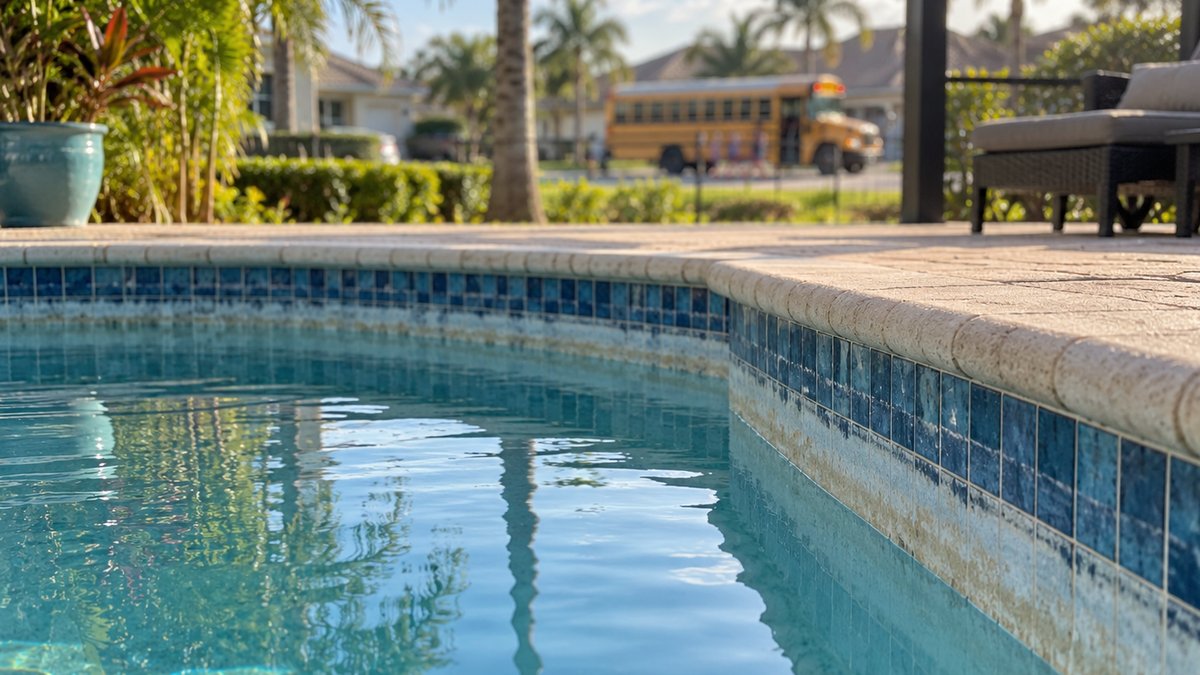
- Cracks in the pool's surface - Visible cracks in the pool shell or deck can let water escape.
- Algae growth despite treatment - When pool water keeps changing, chemicals get diluted. This makes algae harder to control.
- Air bubbles in the return lines - Air in the plumbing system is a clear sign of a leak in your pool.
- The pool pump loses prime - If your pool pump pulls in air, a plumbing leak may be the cause.
Quick Tip: If you notice even one of these common signs, do not wait. A minor leak can turn into major damage to your property if left alone.
Is It Evaporation or a Leak? How to Tell the Difference
Not every drop in pool water level means there is a leak. In South Florida, evaporation is real. Hot sun, low humidity, and wind can cause your pool to lose water. Most pools lose about a quarter inch per day due to evaporation alone.
So how do you know if your pool is losing water due to evaporation or a leak? That is where the bucket test comes in.
How to Do the Bucket Test on Your Pool
The bucket test is a simple way to check if your water loss is due to evaporation or something more serious. Here is how it works:
- Fill a bucket with pool water and set it on the pool step. Mark the water level inside the bucket and the pool water level on the outside.
- Turn off the pool pump and any auto-fill features.
- Wait 24 hours.
- Compare the two levels. If the pool level dropped more than the water inside the bucket, that means there's a leak.
This test helps you rule out evaporation as the cause. If you have ruled out evaporation and the pool level still drops, it is time to find the leak.
How to Use Leak Detection Dye to Find the Leak
Once you have confirmed a leak, the next step is to pinpoint where it is. The dye test is one of the easiest ways to find a pool leak at home.
Here is how to use leak detection dye:
- Turn off the pool pump so the water is still.
- Get a bottle of leak finder dye (available at most pool supply stores).
- Slowly squeeze a small amount of dye around areas where you suspect potential leaks. Focus on the skimmer, return fittings, lights, steps, and any cracks.
- Watch the dye closely. If there is a leak, the dye will pull toward it as water leaks out.
- Move dye around the pool to test your pool for leaks in multiple spots.
Pro Tip from Gator Leak Detection: Use the dye on a calm day. Even a small breeze can move the dye and give you a false reading. Squirt the dye around each fitting, crack, and seam one spot at a time.
The dye test works well for surface leaks. But it will not help much with leaks in underground plumbing or deeper structural issues. That is when professional leak detection equipment makes a real difference.
Where Do Most Pool Leaks Happen?
Leaks can happen in many places. Knowing the most common spots can help you narrow things down before you test your pool. Here are the areas where leaks can often be found:
- Skimmer - The joint where the skimmer meets the concrete pool wall is a top spot for leaks.
- Return fittings - The fitting where water returns to the pool can loosen or crack over time.
- Pool lights - The conduit around the light housing is a common leak point.
- Main drain - Cracks or failed seals around the main drain cause water leaking below the surface.
- Vinyl liner pools - If you have a vinyl liner, small tears or punctures are hard to see but easy to fix with a vinyl patch kit.
- Underground plumbing - Pipes running from the pool equipment to the shell can develop cracks. This is like underground plumbing issues that need professional tools to locate.
- Pool and spa connections - If your pool and spa share plumbing, the connections between them are another spot where a leak happens.
Can You Fix Pool Leaks Yourself?
Some minor leaks are easy to handle on your own. For example, a small tear in a vinyl liner can be sealed with a vinyl patch kit or waterproof tape made for pools. A loose o-ring on a return fitting is a simple swap.
But many leaks need a trained eye. Equipment leaks around the pool pump, cracks in a concrete pool shell, or plumbing leaks hidden underground are not DIY projects. These problems need pressure testing and professional leak detection equipment to repair the leak safely.
Trying to fix pool problems you cannot see often leads to more damage. When in doubt, consulting a professional saves time and money.
How Gator Leak Detection Finds and Fixes Pool Leaks
When DIY methods fall short, that is where Gator Leak Detection comes in. With over 5,000 leak detections across South Florida, our team knows everything you need to know about finding and fixing leaks in inground pools.
Here is what our pool leak detection services include:
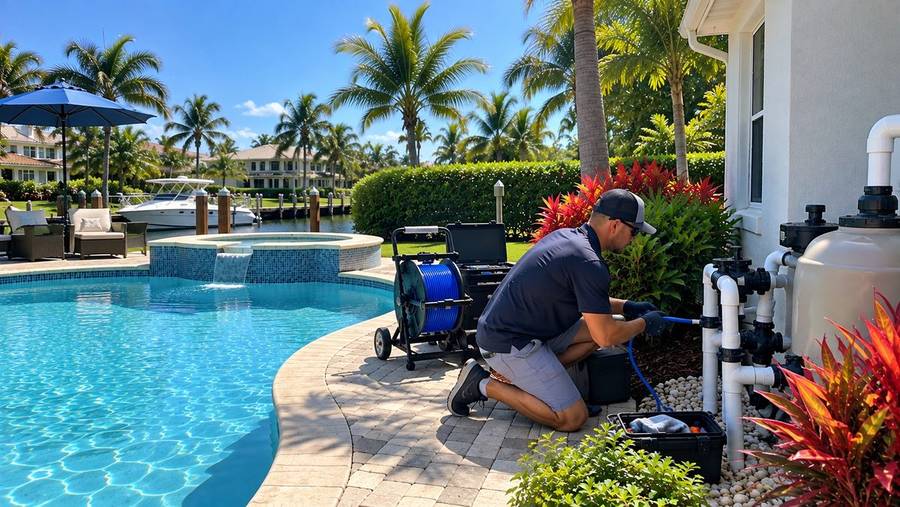
- Electronic Leak Detection - We use advanced leak detection equipment to scan your pool shell, plumbing lines, and pool equipment for even the smallest leak.
- Pressure Testing - Our techs test each plumbing line to isolate exactly where a leak in your pool is located.
- Dye Testing - We apply leak detection dye at key points to visually confirm the source.
- Pool Leak Repair - Once we detect and fix the problem, we handle the repair on the spot when possible. From skimmer replacements to return line fixes, we get it done.
- Trenchless Pipe Repair - For plumbing leaks that are hard to reach, we use trenchless technology to repair service lines with no need to dig up your yard.
- Pool Crack Repair - We use Torque Lock staples to fix pool structural issues for good.
"Gator Leak Detection saved us time and money by quickly identifying and fixing the leak in our pool." - Richard G., Yelp Review
How to Prevent Future Leaks and Protect Your Pool
Finding and fixing a leak is step one. But smart pool maintenance can help prevent future leaks and keep your pool in great shape. Here are a few tips to ensure your pool stays healthy:
- Watch your water level - Check your pool's water level at least once a week. A steady drop could indicate a leak early on.
- Schedule regular inspections - A yearly swimming pool inspection can catch small issues before they become big problems.
- Keep an eye on pool equipment - Check around the pool pump, filter, and heater for any signs of water leaking or corrosion.
- Maintain proper water chemistry - Bad chemistry eats away at surfaces and seals, which can cause leaks in the future.
- Address cracks early - If your pool settles or shifts, even hairline cracks can grow. Do not ignore them.
Why Palm Beach County Pool Owners Choose Gator Leak Detection
If your pool is leaking, you want a team that can find and fix a leak fast. Here is why homeowners from West Palm Beach to Boca Raton, Jupiter to Delray Beach, and everywhere in between trust Gator Leak Detection:
- Over 5,000 pool leak detections and counting
- Licensed professionals (CPC-1461069) with years of hands-on experience
- Advanced leak detection equipment including electronic, pressure, and dye methods
- Full repair service so you do not need to call a second company
- Free estimates for all pool leak repair work
- Serving all of Palm Beach County and beyond including Wellington, Boynton Beach, Coral Springs, Parkland, Fort Lauderdale, and Stuart
At Gator Leak Detection, we are not just a pool service. We are your local experts in pool leak detection, repair, and pool maintenance. Every job gets the same attention to detail whether it is a common pool issue or a complex plumbing leak.
Ready to Find and Fix Your Pool Leak?
Stop guessing and stop losing water. If you have tried the bucket test, used dye around suspected spots, and still cannot find the source, it is time to call a professional.
Gator Leak Detection offers fast, accurate pool leak detection services for homeowners across Palm Beach County and South Florida. Call us today for a free estimate and let our experienced team detect and fix your leak for good.
Call Gator Leak Detection at (888) 645-5325 or (561) 785-2549 to schedule your leak detection appointment. We serve West Palm Beach, Boca Raton, Jupiter, Delray Beach, Boynton Beach, Wellington, and all surrounding areas.