.webp)
Has your water bill just jumped? Is your pool losing a few inches a week? You probably have one big question. Will insurance help pay for it? Pool leak insurance coverage is one of the most misunderstood parts of a homeowner's policy. The honest answer depends on what caused the leak, and how quickly you caught it. At Gator Leak Detection, we hear this question from Palm Beach County homeowners almost every week. Here is what you need to know before you call your insurance company.
Why Pool Leak Insurance Coverage Gets Confusing
Homeowners insurance was not built with pools in mind. Most policies were written around the house itself. Pools got added later, tucked under "other structures" coverage. That is exactly where the confusion starts.
Insurers usually sort damage into two buckets. Sudden and accidental, or gradual and preventable. A pipe that bursts overnight during a hard freeze is sudden. But a slow leak that has been dripping for eight months, unnoticed, is gradual. [BOLD]That distinction is the single biggest factor in whether your claim gets approved.[/BOLD]
What Homeowners Insurance Typically Covers
Most standard policies cover pool damage when the cause fits a sudden, accidental event. A few common examples:
- A tree limb falling and cracking the pool shell during a storm
- A burst pipe caused by a sudden freeze
- Vandalism or theft related damage to equipment
- Storm surge or flooding, though this often requires separate flood coverage
If Gator Leak Detection finds a crack tied to a recent, identifiable event, that documentation can support a claim in the sudden category. The leak detection itself, however, is rarely covered. Insurers typically pay for the repair once the cause is proven. They do not usually pay for the diagnostic work that found it.
What Homeowners Insurance Usually Will Not Cover
This is where most Palm Beach County homeowners get an unwelcome surprise. Standard policies almost never cover:
- Gradual leaks from aging plumbing lines or worn out fittings
- Wear and tear on pool equipment over time
- Leaks that went unnoticed for months and caused secondary damage
- Routine maintenance issues, including cracked grout or degraded seals
Insurers treat gradual damage as preventable. They handle it the same way they handle a slow roof leak. If you should have caught it sooner, the assumption is that you are responsible for it. That is frustrating. But it is also exactly why catching a leak early matters so much, not just for your water bill.
How a Leak Detection Report Helps Your Claim
Even when a leak turns out to be gradual and uncovered, a professional inspection still matters. An adjuster is far more likely to approve a claim quickly when there is a clear, dated report. That report should show where the leak started and what caused it.
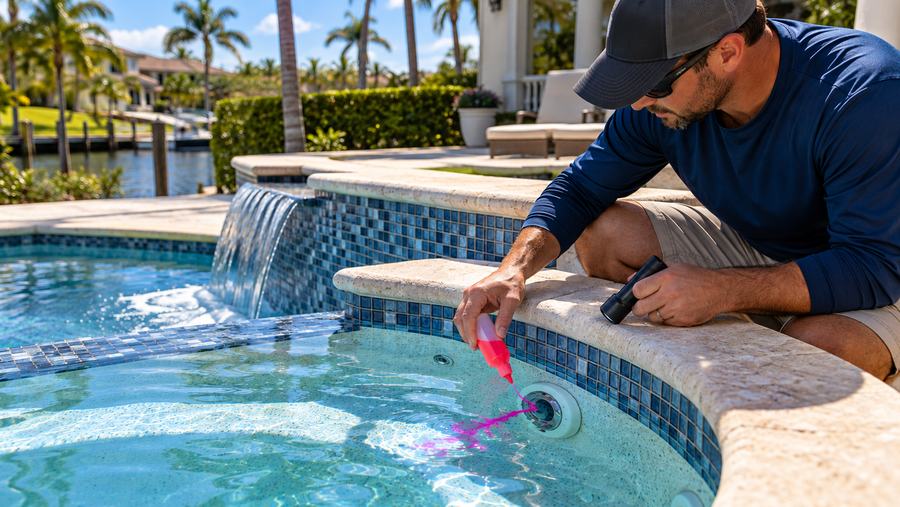
Our reports include the exact leak location and photo documentation. We also note the method used to find it. Depending on the situation, that might be pressure testing, dye testing, or electronic pinpointing. [BOLD]This kind of paper trail is often the difference between a denied claim and an approved one.[/BOLD] That is especially true when there is any question about when the damage occurred.
What a Strong Documentation Package Includes
- Date and time of the initial inspection
- Photos of the affected area before repair
- A written explanation of the suspected cause
- A clear statement on whether the leak appears sudden or gradual
Common Scenarios We See in Palm Beach County
Palm Beach County pools face a specific set of risks. Each one interacts differently with an insurance policy.
Hurricane season brings tree damage, storm surge, and wind related debris. These can crack a pool shell or damage equipment fast. Because these events usually qualify as sudden and accidental, coverage is more likely. Flood related water intrusion, though, often needs a separate flood policy.
Older homes in neighborhoods like West Palm Beach and Palm City sometimes have plumbing that is decades old. When those original lines finally fail, insurers often call it gradual wear. That happens even though the failure felt sudden to the homeowner standing there watching their pool drain.
Steps to Take Before You File a Claim
1. Call a certified leak detection company before you call your insurer, unless it is an obvious emergency
2. Keep photos of the pool area, water levels, and any visible damage
3. Note the approximate date you first noticed the water loss
4. Ask your technician for a written report, not just a verbal explanation
5. Review your policy's "other structures" section before filing, since pool coverage limits are often lower than the main dwelling limit
Skipping the documentation step is the most common mistake homeowners make. Adjusters look for gaps in the timeline. A missing report can turn a simple approval into a drawn out dispute.
Why Timing Matters More Than People Realize
A leak caught within the first few weeks looks very different to an insurer than one running for six months. Early detection also limits secondary damage. Think eroded soil under the deck, cracked pavers, or damage to nearby structural footings. Those secondary issues are almost never covered, even when the original leak might have been.
We tell every homeowner the same thing. Do not wait until the water loss becomes dramatic before calling for an inspection. A quarter inch of water loss per day, beyond normal evaporation, is usually reason enough to have someone take a look.
What to Do the Same Day You Notice a Leak
Do not panic. Most pool leaks are fixable and do not mean you need a full renovation. Start with the simple checks first.
Look at your water level each day for a few days in a row. Mark the level with tape on the skimmer so you have a clear line to compare against. If you are losing more than a quarter inch a day beyond normal evaporation, that is a real signal, not just summer heat.
Next, check the equipment pad. Wet ground around the pump, filter, or heater often points to an equipment leak rather than a pool shell problem. Equipment leaks tend to be cheaper and faster to fix, so this quick check can save you money and stress.
Finally, call a licensed leak detection company before assuming the worst. Many homeowners picture a cracked shell and a full drain and refill. In reality, most leaks trace back to a skimmer, a light fixture, or a fitting. Those repairs are far less invasive.
Frequently Asked Questions
Does homeowners insurance cover pool leak damage in Florida?
It depends on the cause. Sudden, accidental damage like a storm related crack is often covered. Gradual leaks from aging plumbing or wear and tear typically are not. Every policy differs, so review your specific coverage limits under the "other structures" section.
Will my insurance pay for the leak detection service itself?
Usually not. Most policies cover repairs once a covered cause is confirmed. The diagnostic work to find the leak is generally an out of pocket expense. That is true even when the resulting repair gets covered.
How do I know if my pool leak is sudden or gradual?
A professional inspection is the most reliable way to tell. Sudden leaks usually have a clear cause, like a storm, impact, or equipment failure. Gradual leaks tend to come from worn seals, aging pipe joints, or slow structural cracks that developed over time.
What documentation should I get from Gator Leak Detection for an insurance claim?
Ask for a written report with the leak's exact location and the testing method used. It should also include photos and a professional opinion on whether the damage looks sudden or gradual.
Does my policy automatically include pool coverage?
Not always. Pools often fall under "other structures," which typically has a lower limit than your main home. Some older policies exclude pools entirely, so confirm with your agent before you need to file a claim.
Should I file a claim for a small pool leak?
Not necessarily. Small claims can sometimes affect your premium more than they save you in repair costs. A leak detection report gives you the facts you need to decide. You will know the exact cause and repair cost before making that call.
Whether your leak turns out to be covered or not, the first step stays the same. Schedule a free leak detection estimate with Gator Leak Detection and get a clear answer on what is happening under your pool, before you make any decisions with your insurance company.