.webp)

You walk out to your pool on a hot Palm Beach County morning, glance at the waterline, and something feels off. The water level looks lower than it did yesterday. Maybe even lower than the day before. Your first thought is probably the same one we hear from homeowners across Broward County and Port St. Lucie every single week: is my pool leaking?
The answer might surprise you. In South Florida’s climate, pools can lose a noticeable amount of water to evaporation alone, especially during certain times of the year. But there are also situations where that dropping waterline is absolutely a sign of a real leak that needs professional attention. Knowing the difference can save you hundreds of dollars on your water bill and potentially thousands in structural damage down the road.
How Much Water Does a Pool Normally Lose in South Florida?
Every pool loses water to evaporation. It’s a basic fact of owning a pool, and it happens whether you’re in Jupiter, Boca Raton, or Coral Springs. The question isn’t whether your pool is evaporating. It’s whether the amount of water loss you’re seeing falls within the normal range.
In the Palm Beach and Broward County area, most inground pools lose somewhere between a quarter inch and a half inch of water per day under typical conditions. That can add up to two to three inches per week during peak months, and it often catches homeowners off guard. Several factors specific to our region drive this rate higher than what pool owners might experience in other parts of the country.
Factors That Increase Pool Evaporation in South Florida
Temperature is the most obvious factor. South Florida’s heat means your pool water stays warm for most of the year, and warmer water evaporates faster. But temperature alone doesn’t tell the full story.
Wind plays a major role that many homeowners overlook. Coastal areas throughout Palm Beach County and Broward County regularly experience afternoon breezes that move across the surface of your pool, carrying water vapor away faster than still air would. If your pool sits in an open backyard without a screen enclosure, windshield landscaping, or fence barriers, you’re going to lose more water to evaporation than your neighbor whose pool is tucked behind their home.
Humidity might seem like it would slow things down, and it does to some extent. Our humid summers actually reduce evaporation compared to the drier winter and spring months. That’s why many South Florida homeowners notice their pools losing more water between November and April when the humidity drops and the temperature difference between pool water and nighttime air widens. If you heat your pool during the cooler months, expect that gap to increase even further.
Water features like fountains, spillovers, and deck jets also increase evaporation because they expose more water surface area to the air. Running these features all day can contribute to noticeably faster water loss that has nothing to do with a leak.
Signs Your Pool Is Actually Leaking
Evaporation is gradual and predictable. A leak, on the other hand, tends to show patterns that don’t line up with normal water loss. If you’re seeing any of the following, there’s a good chance something more than evaporation is going on.
- Water loss exceeding half an inch per day consistently. If your pool is dropping more than this on a regular basis, even accounting for heat and wind, evaporation alone is unlikely to be the cause.
- You’re adding water more than once a week. Topping off occasionally is normal. Filling the pool every few days is not.
- Wet or soft spots in the yard near the pool. Unexplained soggy areas in the grass around the pool deck or equipment pad can indicate water escaping from underground plumbing lines.
- Your pool chemicals are constantly off balance. When water leaves your pool through a leak, it takes chemicals with it. If you’re constantly adjusting chlorine, pH, or alkalinity levels and can’t seem to keep them stable, a leak could be diluting your chemistry.
- Cracks in the pool deck or shifting pavers. Water escaping from the pool shell or plumbing can erode the soil beneath your deck over time, causing the surface to settle or crack.
- Air bubbles in the return jets or the pump is struggling to prime. Air entering the suction side of the plumbing system is a telltale sign of a leak on the intake lines.
- The autofill runs constantly. Many South Florida pools have automatic water levelers. If yours is engaging frequently, it may be masking a significant leak.
The Bucket Test: A Simple Way to Check
Before calling a professional, there’s a straightforward test you can run at home to help determine whether you’re dealing with evaporation or a leak. It’s commonly known as the bucket test, and it works by comparing water loss in your pool to water loss in a controlled container exposed to the same conditions.
Here’s how to do it:
- Fill a five-gallon bucket with pool water and place it on the top step of your pool so the bucket is partially submerged but not floating.
- Mark the water level on the inside of the bucket. Then mark the water level on the outside of the bucket at the pool’s waterline.
- Turn off any autofill devices. Keep the pump running on its normal schedule.
- Wait 24 to 48 hours. Make sure nobody uses the pool during the test, and don’t run the test if heavy rain is in the forecast.
- Compare the two marks. If the pool water dropped significantly more than the water inside the bucket, you likely have a leak. If both dropped at roughly the same rate, evaporation is your answer.
This test isn’t perfect, and it won’t tell you where a leak is. But it’s a solid first step that helps you understand whether professional leak detection is the right next move.
Why South Florida Pools Are More Prone to Leaks
Our climate doesn’t just accelerate evaporation. It also creates conditions that make pool leaks more common in the first place. Understanding why can help you stay ahead of problems before they become expensive.
South Florida’s soil composition, particularly the sandy and limestone-heavy ground common throughout Palm Beach County and Broward County, shifts more than soil in other regions. This ground movement puts stress on pool shells and the plumbing connections that run underground. Over time, small separations can develop at fittings, returns, and skimmer throats that allow water to escape slowly.
The high water table in our area adds another layer of complexity. When groundwater levels rise after heavy rain or during wet season, it creates hydrostatic pressure beneath the pool shell. This pressure can affect seals, fittings, and structural joints, especially in older pools that haven’t been maintained regularly.
Sun exposure is relentless here. UV radiation breaks down sealants, PVC cement, and pool surface materials faster than in climates with less direct sun. Gaskets around pool lights, return fittings, and skimmer faceplates can deteriorate over time, creating small leak paths that start almost imperceptibly and grow gradually.
Finally, our tropical storm season puts pools through sudden stress events. Heavy rain, saturated ground, and debris can all contribute to the kind of subtle damage that doesn’t show up immediately but leads to water loss weeks or months later.
When to Call a Professional for Pool Leak Detection
If your bucket test suggests a leak, or if you’re seeing multiple warning signs from the list above, it’s time to bring in a leak detection specialist. Trying to locate a pool leak on your own typically leads to guesswork, unnecessary digging, and money spent on repairs that don’t solve the actual problem.
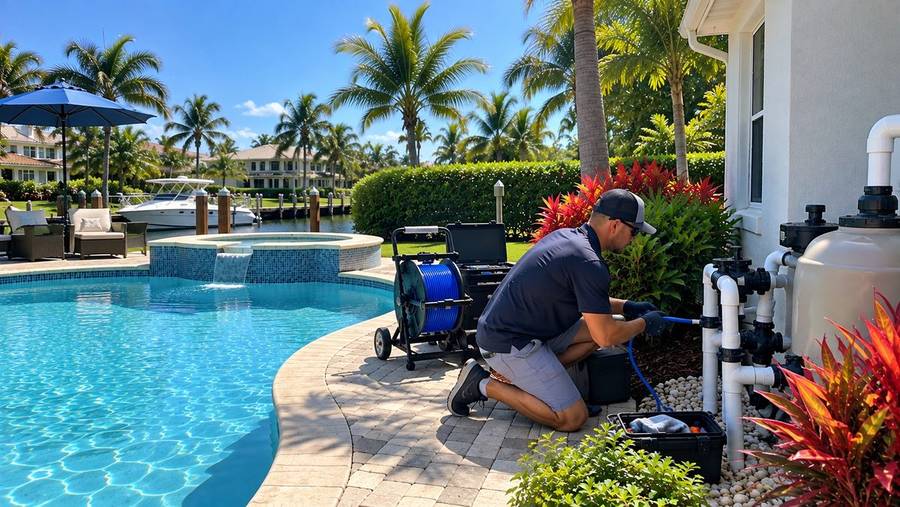
Professional pool leak detection uses specialized equipment like electronic listening devices, pressure testing systems, and dye testing to locate the exact source of water loss without tearing up your pool or deck. At Gator Leak Detection, we’ve performed over 5,000 leak detections across Palm Beach County, Broward County, and Port St. Lucie, and a significant portion of the leaks we find are in locations homeowners never would have suspected.
Common leak sources we identify include deteriorated pipe connections buried underground, failed seals around pool lights and return fittings, cracks in the pool shell that aren’t visible from the surface, and equipment pad plumbing that drips slowly enough to go unnoticed for months. In many cases, we can complete the detection and repair in the same visit, getting your pool back to normal quickly.
The Real Cost of Ignoring Pool Water Loss
It’s tempting to just keep topping off the pool and hoping the problem is evaporation. But if a leak is the actual cause, every day you wait allows the damage to compound.
Water escaping from a leak erodes the fill dirt and compacted soil around and beneath your pool. In Palm Beach County’s sandy terrain, this erosion can happen faster than you’d expect, leading to deck settling, cracked pavers, and in severe cases, voids beneath the pool shell that compromise its structural stability. Repairing this kind of secondary damage costs significantly more than fixing the original leak.
There’s also the ongoing expense of wasted water and chemicals. A pool losing just one inch of water per day can waste over 500 gallons daily depending on the size of the pool. At current South Florida water rates, that adds up fast on your monthly utility bill, and the constant need to rebalance your pool chemistry means you’re spending more on chemicals than necessary too.
Protect Your Pool and Your Investment
Whether it’s evaporation or a leak, understanding why your pool is losing water puts you in control. If the bucket test points to evaporation, consider strategies like running water features less frequently, using a pool cover when the pool isn’t in use, or adjusting your heater settings during the cooler months. These small changes can reduce water loss noticeably.
If the test suggests a leak, or if you’re just not sure, the smartest thing you can do is get a professional assessment before the problem grows. Gator Leak Detection serves homeowners throughout Palm Beach County, Broward County, and Port St. Lucie with accurate, non-invasive leak detection and same-day repair solutions. Our team uses state-of-the-art LeakTronics equipment to pinpoint leaks precisely, so there’s no guesswork and no unnecessary damage to your property.
Call Gator Leak Detection today at (888) 645-5325 or request a free estimate online to schedule your leak detection. With over 5,000 detections completed, we’ll give you a clear answer and get your pool back to where it should be.