.webp)
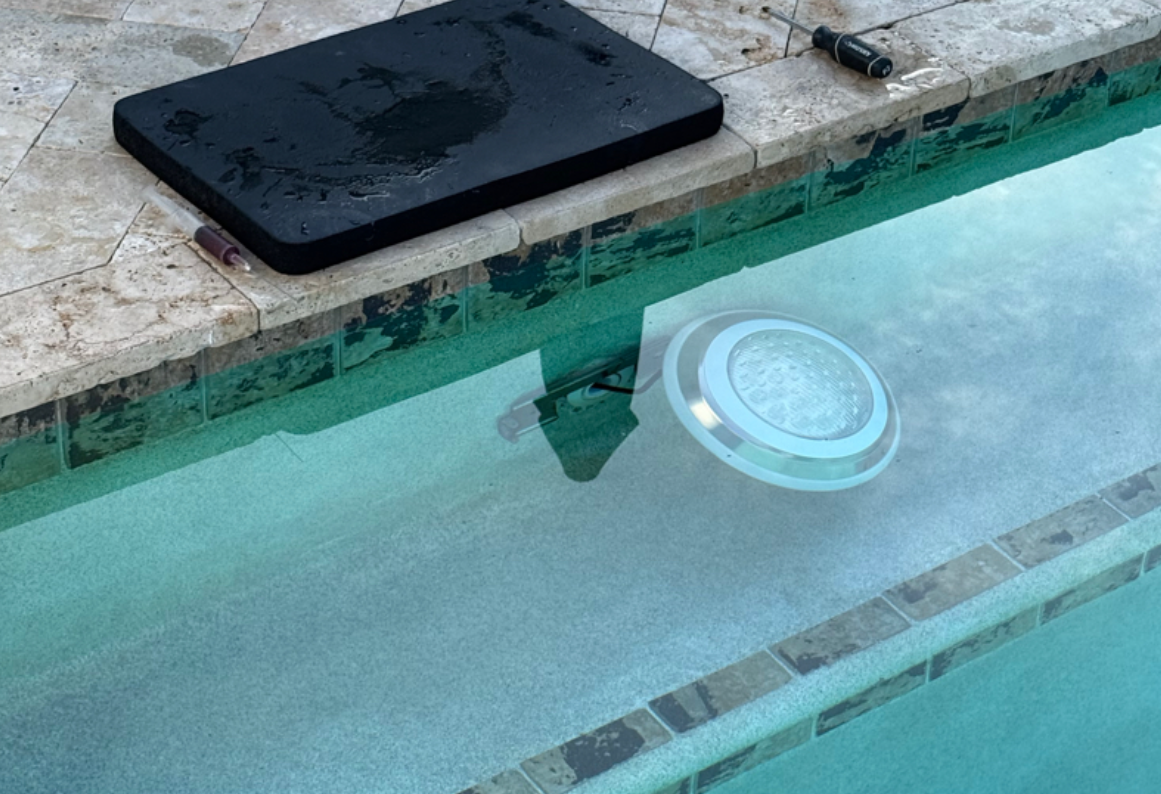
Homeowners across Palm Beach County, Broward County, and Port St. Lucie, Florida are upgrading their pools with energy-efficient LED lighting. One of the most popular options today is the aftermarket niche-less pool light. While these lights are marketed as easy to install and visually appealing, improper installation methods can silently cause serious structural damage and persistent pool leaks.
One of the biggest concerns we see during pool leak inspections across South Florida is the way some niche-less lights are mounted directly into the pool wall using brackets that require drilling into structural concrete.
What Is a Niche-less Pool Light?
A niche-less pool light is designed to be mounted directly to the pool wall instead of fitting into a traditional light niche. These lights typically require a metal or plastic mounting bracket that is fastened to the concrete shell using anchor screws.
To secure the bracket, installers often drill two holes into the pool wall, usually on either side of an existing wall or even next to an old light niche. While this may seem like a minor modification, it can cause major long-term consequences.
Why Drilling Into a Pool Wall Is a Serious Structural Risk
Concrete and gunite pool shells are engineered as continuous, load-bearing structures. Any penetration into that shell becomes a potential point of failure. This is especially dangerous in Florida pools where constant water pressure, shifting soil, and high groundwater levels already stress the structure.
1. Structural Integrity Is Weakened
Drilling holes interrupts the uniform density of the shell, reducing its ability to resist cracking and flexing under pressure.
2. Rebar Damage Is Possible
Inside the pool wall is a steel rebar grid that reinforces the structure. Drilling blind can strike, weaken, or sever this steel, instantly compromising that section of the pool wall.
3. New Leak Pathways Are Created
Every drilled hole becomes a direct pathway for water intrusion. Even if sealed, thermal expansion, vibration, and chemical exposure can cause seal failure over time.
4. Light Niches Are Already Structural Cutouts
Traditional light niches are carefully engineered openings in the pool shell. Drilling additional holes beside an existing niche concentrates stress in one of the most vulnerable areas of the pool wall, significantly increasing the risk of cracking and water loss.
Why This Is a Growing Problem in Palm Beach, Broward & Port St. Lucie Pools
South Florida has a massive inventory of older concrete and gunite pools. Many of these pools were built with traditional niches that function perfectly when maintained correctly. Problems arise when niche-less lights are retrofitted improperly as “upgrades” without understanding the engineering consequences.
This often leads to:
- Persistent, unexplained water loss
- Cracking around the light or wall penetrations
- Rust staining from compromised rebar
- Water migration behind the pool shell
- Expensive structural and leak repairs months or years later
When Are Niche-less Pool Lights Appropriate?
Niche-less lights are best suited for:
- New pool construction
- Fiberglass pools specifically designed for them
- Factory-engineered mounting locations
They are not ideal for retrofitting existing concrete or gunite pools, especially when drilling into the structural shell is required.
Safe Alternatives for Pool Light Upgrades
If your pool already has a traditional light niche, the safest solution is to:
- Use a niche retrofit LED light designed to fit directly into the existing niche
- Avoid any drilling into the structural shell
- Preserve the original engineering of the pool wall
- Reduce leak risk to near zero
These retrofit lights provide the same modern look without compromising the structure.
Professional Leak Detection Matters in South Florida
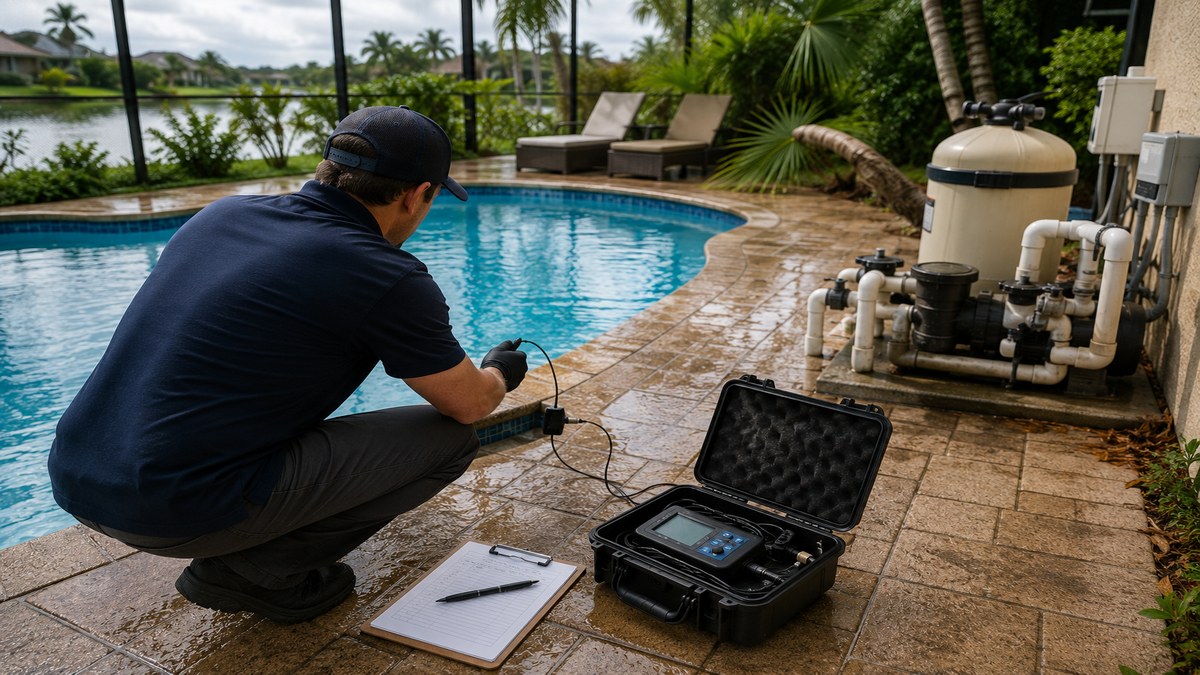
If your pool water level is dropping and you’ve recently had a light installed or replaced, it’s critical to have a professional leak detection test performed immediately. Many of the most severe light-related leaks we find in Palm Beach County, Broward County, and Port St. Lucie originate from improper drilling and mounting.
Early detection can prevent:
- Structural deterioration
- Deck settlement
- Underground washouts
- Major reconstruction costs
Final Thoughts
Aftermarket niche-less pool lights can be a great upgrade—but only when installed correctly and in the right application. Drilling into a concrete or gunite pool wall to mount a bracket is not a minor decision. It permanently alters the structure of the pool and dramatically increases the risk of future leaks and damage.
If you are considering a pool light upgrade or are experiencing unexplained water loss in Palm Beach County, Broward County, or Port St. Lucie, make sure the installation method protects—not compromises—your pool investment.