.webp)
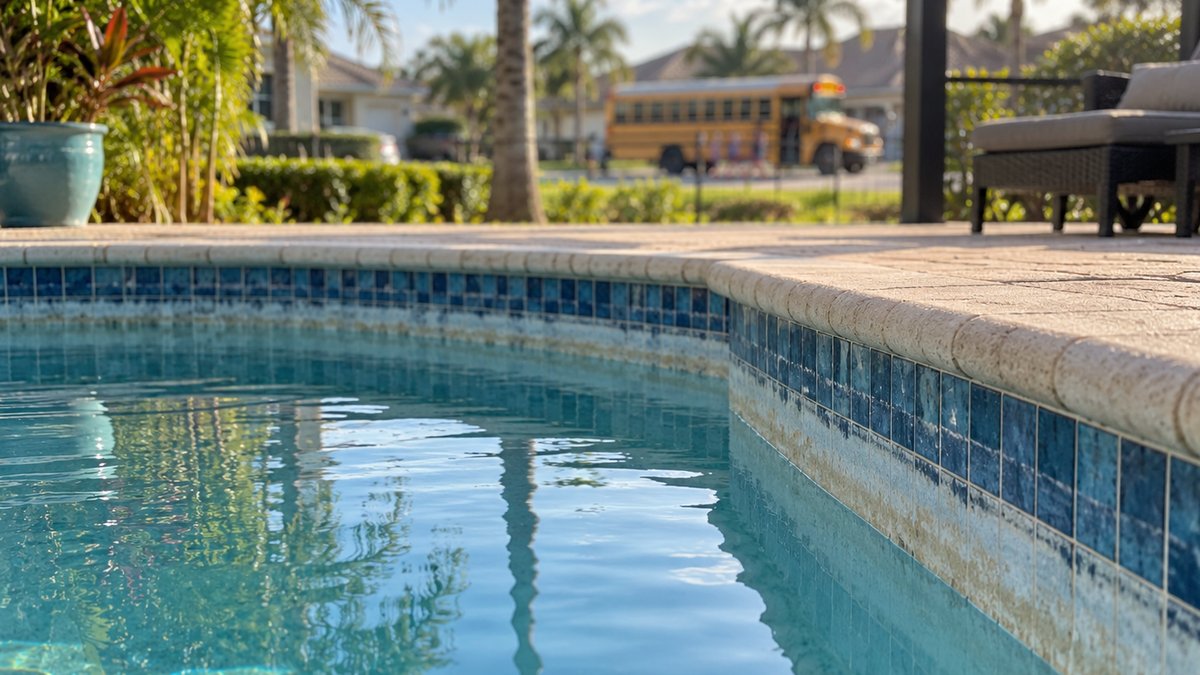
The backpacks are packed, the alarms are set earlier, and the pool in your backyard just went from the busiest spot in the house to one of the quietest. That shift matters more than most Palm Beach and Broward County homeowners realize. Once the kids head back to school, pool usage drops fast, and a dropping water level that used to get blamed on splashing and cannonballs suddenly has nowhere to hide. At Gator Leak Detection, late summer and early fall are when we get some of our most useful leak calls of the year, simply because families finally notice the water isn't behaving the way it should.
Why September Water Loss Looks Different Than July Water Loss
During summer break, a pool gets used constantly. Kids are in and out, splashing, doing cannonballs, dragging water onto the deck on towels and pool floats. A quarter inch of water loss over a few days barely raises an eyebrow because there are a dozen easy explanations sitting right there in the yard.
Once school starts, that changes. The pool might get used once or twice a week instead of daily. As a result, the water level becomes a much more honest indicator of what is actually happening below the surface. If you notice the same drop in water level with far less activity causing it, that is a signal worth paying attention to, not ignoring.
Evaporation Still Happens, But It Has Limits
Florida heat means evaporation never fully stops, even in fall. However, normal evaporation typically accounts for about a quarter inch to half an inch of water loss per day during hot, dry, windy stretches. If your pool is losing more than that, or losing water at a steady clip on calm, humid days when evaporation should be minimal, something else is likely going on.
The Bucket Test: A Simple Way to Check
Before assuming the worst, it helps to run a simple check at home.
- Fill a bucket with pool water and set it on the pool steps so the water levels inside and outside the bucket match
- Mark both water lines with tape or a marker
- Wait 24 hours without using the pool
- Compare the two lines
If the pool's water line has dropped noticeably more than the water line inside the bucket, you are likely dealing with an actual leak rather than ordinary evaporation. This test is not perfect, but it is a fast, no-cost way to decide whether it is time to call in a professional.
Common Signs Your Pool Has a Leak, Not Just Evaporation
- Water level dropping more than half an inch a day with little to no pool use
- Wet or unusually soft spots in the lawn near the pool equipment or shell
- A noticeable rise in your water bill without an obvious explanation
- Cracks appearing around the pool deck, coping, or tile line
- Air bubbling into the pool from a return jet or the skimmer
- The pump needing to run longer than usual to maintain proper pressure
Any one of these on its own might not mean much. A combination of two or three together is usually a strong sign that professional leak detection is worth scheduling.
Why Ignoring a Leak Now Costs More Later
A small leak in September rarely stays small by January. Structural cracks widen with time and ground movement, and underground plumbing leaks tend to erode the soil around them, which can eventually undermine equipment pads or even parts of the pool deck. There is also the less obvious cost: a pool that is quietly losing water is also losing chemicals, and homeowners often end up buying more chlorine and balancing products than they should need, all while chasing a problem that treatment alone will never fix.
For families in Palm Beach, Broward, and Martin counties, fall is also when many pools get less daily attention simply because life gets busier. A slow leak can run for weeks before anyone circles back to check on it, and by then the fix is often bigger, and more expensive, than it needed to be.
What Professional Leak Detection Actually Involves
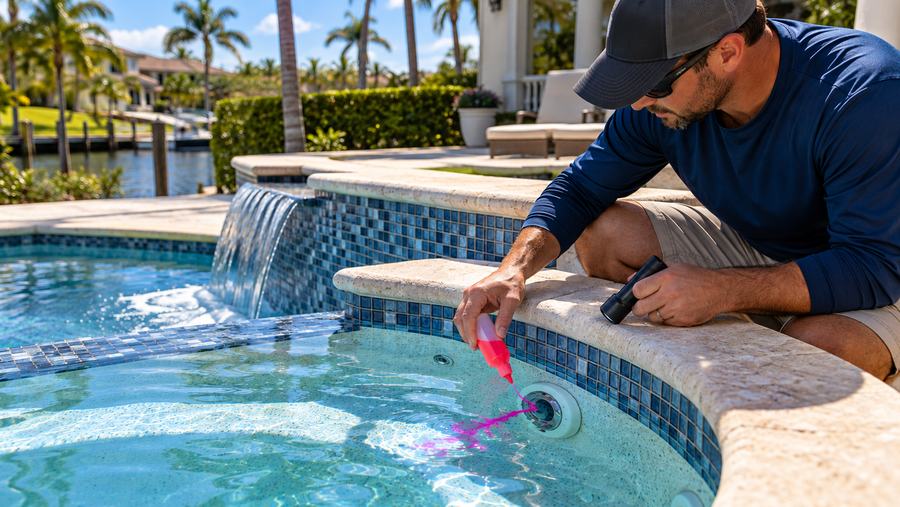
At Gator Leak Detection, we do not guess. Our technicians use a combination of pressure testing, dye testing, and electronic leak detection equipment to pinpoint exactly where water is escaping, whether that is a structural crack, a failing skimmer, a damaged return line, or an underground pipe issue. We have located more than 5,000 leaks across South Florida pools, and one thing we tell every homeowner is the same: the earlier a leak gets found, the simpler and less costly the repair usually is.
Because we serve homeowners throughout Palm Beach and Broward County, we see this seasonal pattern every single year. The pool gets quiet, the water level tells the truth, and families finally call to have it checked out. There is nothing wrong with that timing. It is actually a smart moment to act, before winter storage patterns and holiday guests add even more variables into the mix.
Frequently Asked Questions
How much water loss is normal for a Florida pool in the fall?
Typical evaporation in South Florida runs about a quarter inch to half an inch per day during warm, dry conditions. Consistent loss beyond that, especially with reduced pool use, usually points to a leak rather than simple evaporation.
Can a small leak wait until next summer to get fixed?
It is not recommended. Small leaks tend to worsen over time, particularly around structural cracks or underground plumbing, and waiting often turns an affordable repair into a much larger one.
Does homeowners insurance typically cover pool leaks?
Coverage varies by policy and cause of the leak, so it depends on your specific situation. A licensed leak detection company can help document the source of the leak, which is often needed for any insurance conversation.
How long does a professional pool leak detection appointment take?
Most leak detection appointments take a couple of hours, depending on the pool's size and how many potential leak points need to be tested with pressure and dye testing methods.
Will fixing a leak require draining my whole pool?
Not always. Many leaks can be repaired without a full drain, though some structural or plumbing repairs may require partial draining. Your technician will explain what your specific repair needs before any work begins.
What areas does Gator Leak Detection serve?
Gator Leak Detection serves homeowners throughout Palm Beach, Broward, and Martin counties, including West Palm Beach, Boca Raton, Fort Lauderdale, Wellington, Boynton Beach, and surrounding communities.
Get Your Pool Checked Before the Water Level Tells You Something Bigger
Back to school season is a natural checkpoint for your pool, not just your kids' calendar. With less daily use, your water level is a far more reliable clue than it was all summer. If the bucket test or the signs above have you wondering, do not wait for the leak to grow. Schedule a professional leak detection appointment with Gator Leak Detection today and get answers before fall turns into a bigger repair bill.